Nine months ago I set up a patch on the main synth for which I had plans. I’m drawn to all sorts of music. Having spent my younger years as an orchestral brass player, classical and other forms of orchestral music have long since been in my listening rotation for decades. What started with Tchaikovsky and Brahms in junior high led to more modern composers like Ólafur Arnalds, Jóhann Jóhannsson, and Max Richter in my thirties and fourties. Several years ago while perusing a “What am I listening to?” post from my favorite artist, Steven Wilson, I happed upon Max Richter’s album Three Worlds: Music For Woolf Works. It’s the soundtrack for a modern ballet by Wayne McGregor about the life of British author Virginia Woolf. From my very first listen I was captivated. Tuesday, the final track of the album, a nearly 22 minute piece, was especially beautiful in a way I find hard to describe. For years I’ve returned to that track as a means for emotional support. And on an August day last summer I decided I wanted to do a version of Tuesday using both acoustic instruments like xylophone and a Tascam Portastudio, as well as Chromaplane and a full modular synthesizer.
My plans were grand, and what I wanted to do was clear in my head. I made sheet music, transcribing parts by ear. I rehearsed those parts until they sounded good enough to move on. But what started as a manageable project turned into a reality check. My goal was to perform the entire piece in one take, as I do for all of my recordings. I knew it would take a lot of rehearsal, but I was okay with that. And then I got stuck. I ran into problems I couldn’t overcome, both with my skill level and my gear. There were some things even intense rehearsal couldn’t sort, or at least I couldn’t figure out how to sort them, and I had issues understanding how to mix many more outputs than I had inputs for. So I let the patch sit with the idea that I would take some time to figure it out, or at least find some way to keep moving forward. But I never did figure it out, and yet the patch continued to sit, over a hundred cables draped about, sprawling across the synth like cobwebs on an old bookcase. I had hopes. I had plans. And for nine months it sat; the memory of its machinations fading further by the day. It wasn’t until recently that I realized I either needed to shit, or get off the pot (as my mom used to say). After nine months of exclusively playing my Make Noise synth I was itching to play my main synth again, and I finally came to the realization that if I wasn’t ready to immediately resume working on it, the patch on the wall had to come down. A few days later, I finally took it down. I knew that I’d never again get what I had, despite some pretty thorough note taking, but at the same time I knew I couldn’t use it. It was bittersweet.
A few days later I decided it was time to finally patch the main synth again. After nine long months it was overdue. And when I walked up to it to get started I was filled with emotions, and, if I’m honest, slightly intimidated. My Make Noise synth is pretty large and fully featured. It’s not really wanting for anything that wouldn’t be gratuitous at this point. But my main synth is about two and a half times larger and with a whole lot of modules that are complicated. I hadn’t used any of them in a while, and I balked.
This is not like riding a bike.
But rather than stare at the wall in a fit of paralysis I decided to make a definitive choice. The base of the patch, like my last Make Noise patch, Sketch 23, would be a fixed chord that was level controlled by nothing other than chaos. Although Spectraphon can certainly be used in a low frequency chaos mode as a modulator, it functions very differently than the chaos circuits from Nonlinearcircuits. And if I’m honest, I missed using modules like The Hypster and Let’s Splosh. Chaos was an immediate infatuation when I got my first chaos module, the venerable Triple Sloth. That first module sent me down a hole of research into what chaos is as a scientific and mathematical principle, and I felt like it was a good parallel to life. I’ve used it consistently ever since.
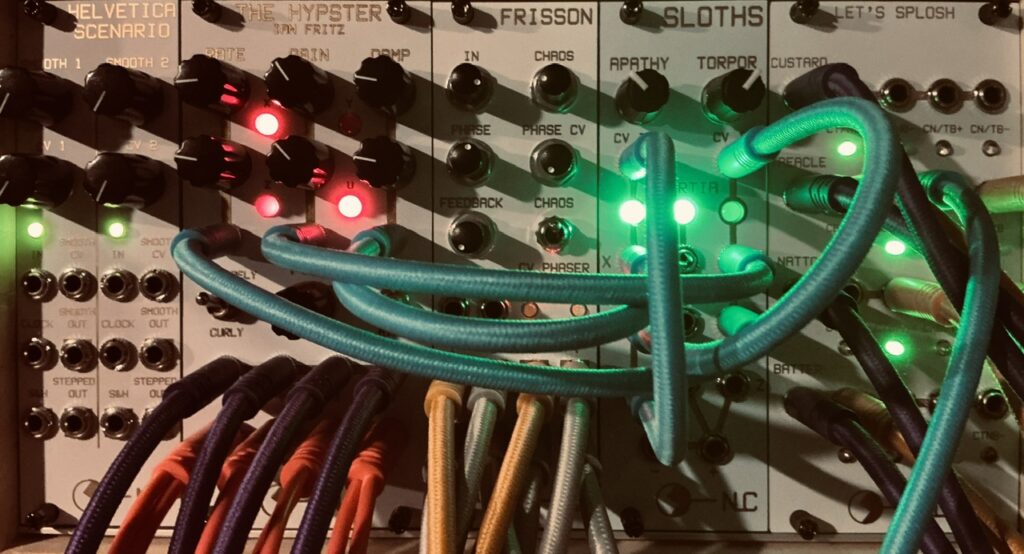
Although the patch is structurally similar to Sketch 23, and is performed in a similar way, how it was put together was very different. Having decided to use a chaos driven chord as the base, I immediately started patching the X, Y, Z, and U outputs of The Hypster to the CV inputs in the ever-flexible Intellijel Amps. As I began to connect the patch cables from The Hypster I wasn’t exactly sure which quad of oscillators I wanted to use, but at this point when someone mentions a quad oscillator my mind immediately goes to the Synthesis Technology E370. It’s extremely powerful, and very flexible. And because I wanted to minimize any issues with the patch as I progressed, I decided to use a familiar set of wavetables made up of sines along the X axis. My original intention with Sketch 23 was to use a E7 chord, but for some reason ended up with a straight EMaj7 chord, so I rectified that oversight in this patch, only in a higher register. The waves were quite simple. A bank of sine waves that move up and down the harmonic series. In order to create harmonic movement, each of the wavetables were modulated by four outputs from the very awesome Nonlinearcircuits Frisson. If I’m honest, I’m not sure what sorts of waves Frisson produces. I’ve never put any of the outputs, which should all be reasonably similar, though each with a different phase and amount of slew, under a scope to get a picture of Frisson’s general wave shape. But I’ve used it a bunch, and, like most chaos, it’s definitely periodic. Each oscillation just slightly different from the last. These differences bore out in the patch with how the harmonics would flow up and down with each pass of the CV. Sometimes the harmonics rise and fall quickly, while others move a bit more methodically. Though the top note of those harmonic progressions had a ceiling set by attenuation, that top note wasn’t always the top note. Sometimes it was a pitch lower. Sometimes more. The movement was generally predictable, though not really. Just as chaos ought to be.
Using the chaos outputs from The Hypster to control audio levels requires some thinking and tinkering. Not because of some complication, but because the four outputs can vary wildly in their output levels. The X output is about 6V point-to-point, ranging from -3V to +3V. Outputs Y and Z range like a standard LFO, from -5V to +5V. U, on the other hand, is a hot signal that can have a massive 20 volts point-to-point, ranging from -10V to +10V. I’ve used these signals from The Hypster for similar purposes before, and I knew about these voltage differences between the outputs, but it had been so long that I’d forgotten all of the information except that output U was the strongest one. That mis-remembrance, along with a solid dose of stubbornness by refusing to RTFM, caused some early frustration. I fiddled with the CV knobs of the VCA for what seemed like hours, even if it was only a few minutes, in order to get the balance I was looking for from each chord tone. And I continued to refine and tweak those CV attenuation knobs all the way through recording this patch. Adjusting this one part of the patch was a recurring theme from beginning to end. My problem was two-fold. I wanted the fundamental of the chord, E, to have the strongest level, while needing to tame the highest tone, D. I had some level of issue with both. Using the U output for the fundamental I’d over attenuate and lose the bottom tone, or else it would it would clip in the VCA. The highest note of the chord, because of the harmonic shifts as the wavetable was modulated, was either too loud, or way too loud, even though the CV level from Output Z wasn’t particularly hot. It took a while to coax that channel to a reasonable level, and even still it probably could have been a bit lower in volume.
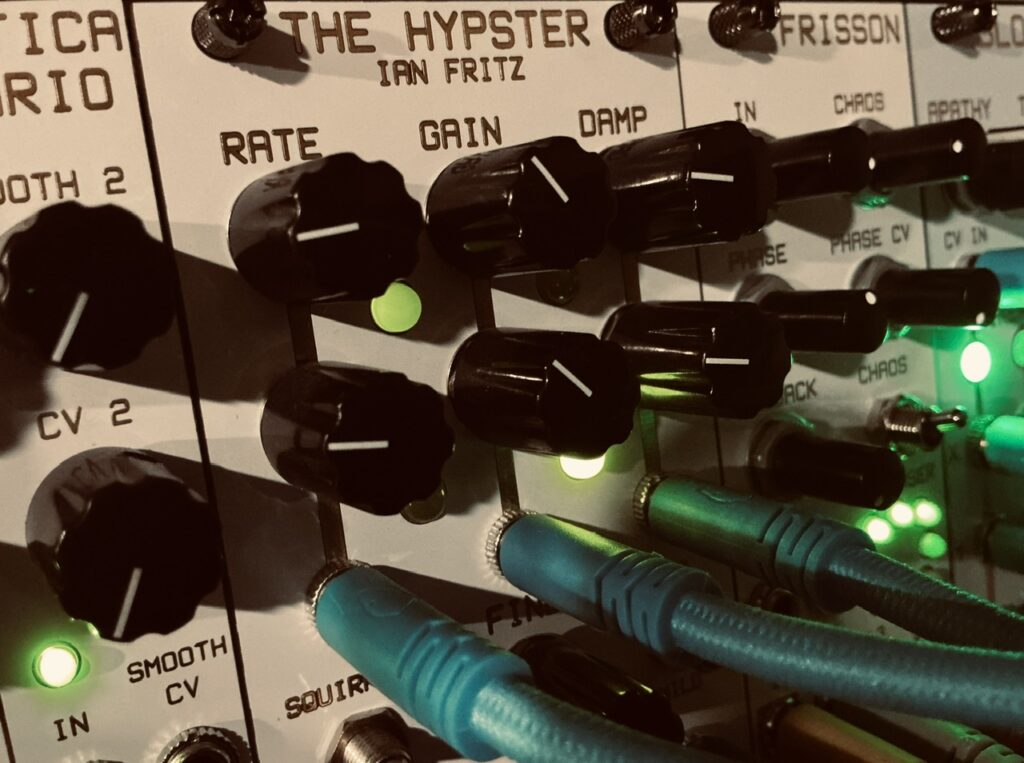
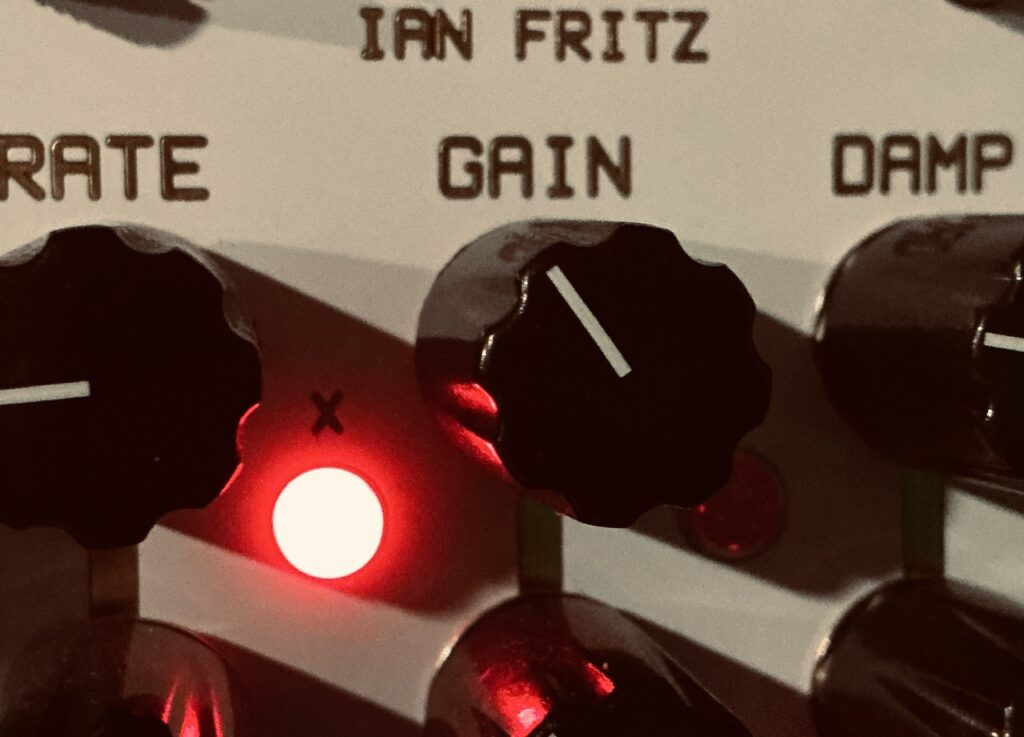
The Hypster’s Frequency was low; below 9 o’clock on the knob. Gain was set moderately high at about 11 o’clock, while Damp was set to just above 9 o’clock. All three of The Hypster’s CV inputs were modulated by three outputs from Triple Sloth. Frequency was regulated fairly lightly. I generally don’t want modulation that will have drastic speed differentials. I like a signal that can move slightly faster and slightly slower, more like a natural ebb and flow than purposeful or dramatic increases and decreases. As a means to keep the signal from becoming too much like a standard sine wave Damp received about the same amount of attenuated modulation as Frequency. Gain, which influences a number of attributes in the U signal (from which all of the other signals are derived) before it goes through the various chaos circuits was modulated more heavily, which kept the level and amount of feedback at generally high levels.
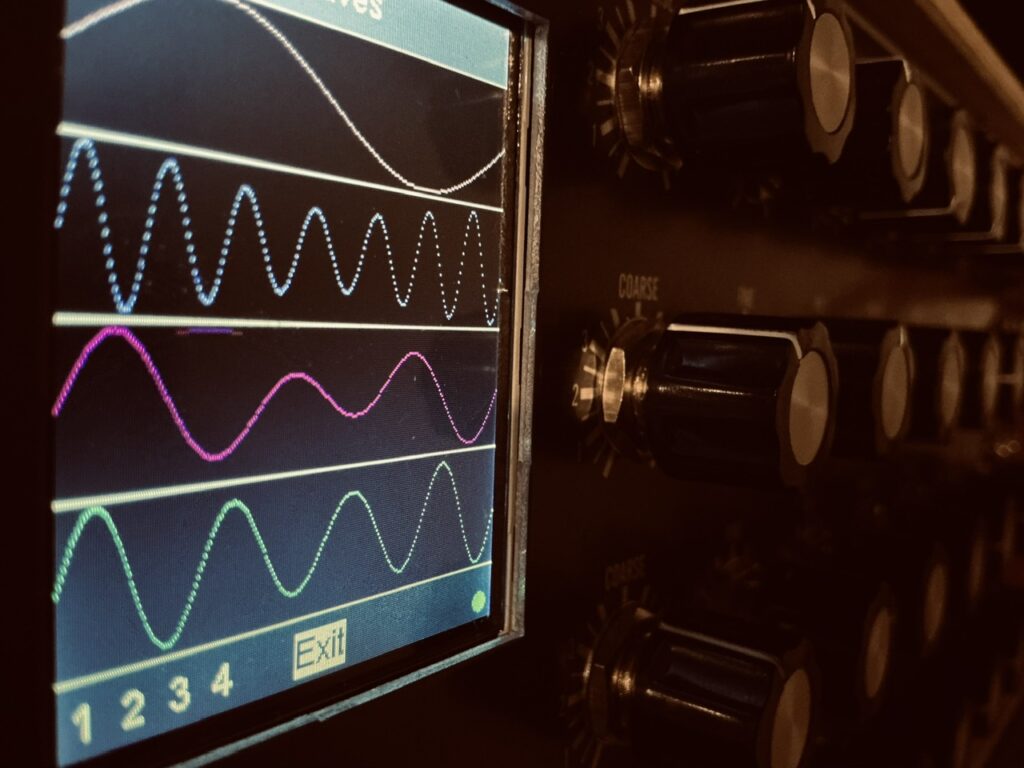
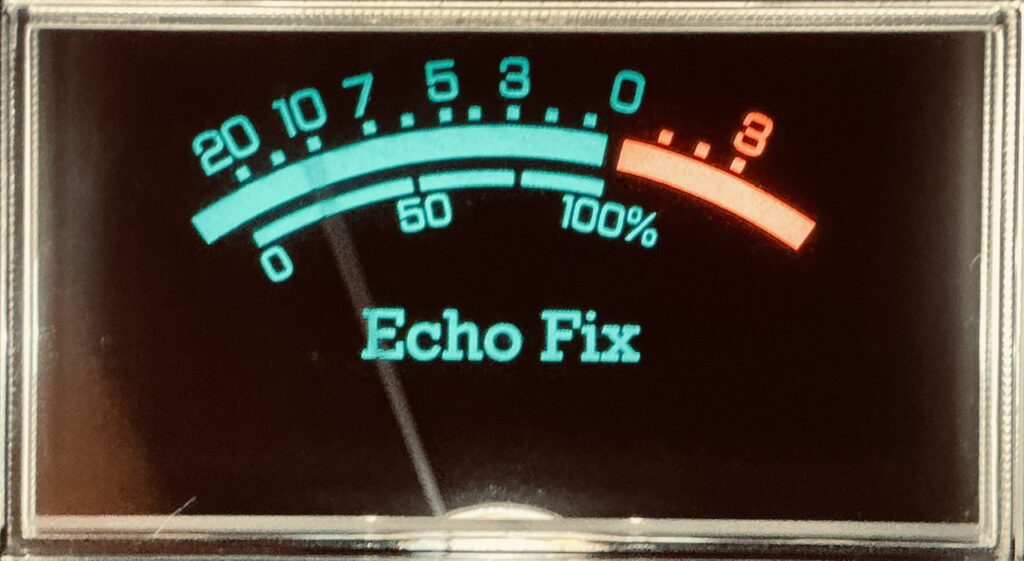
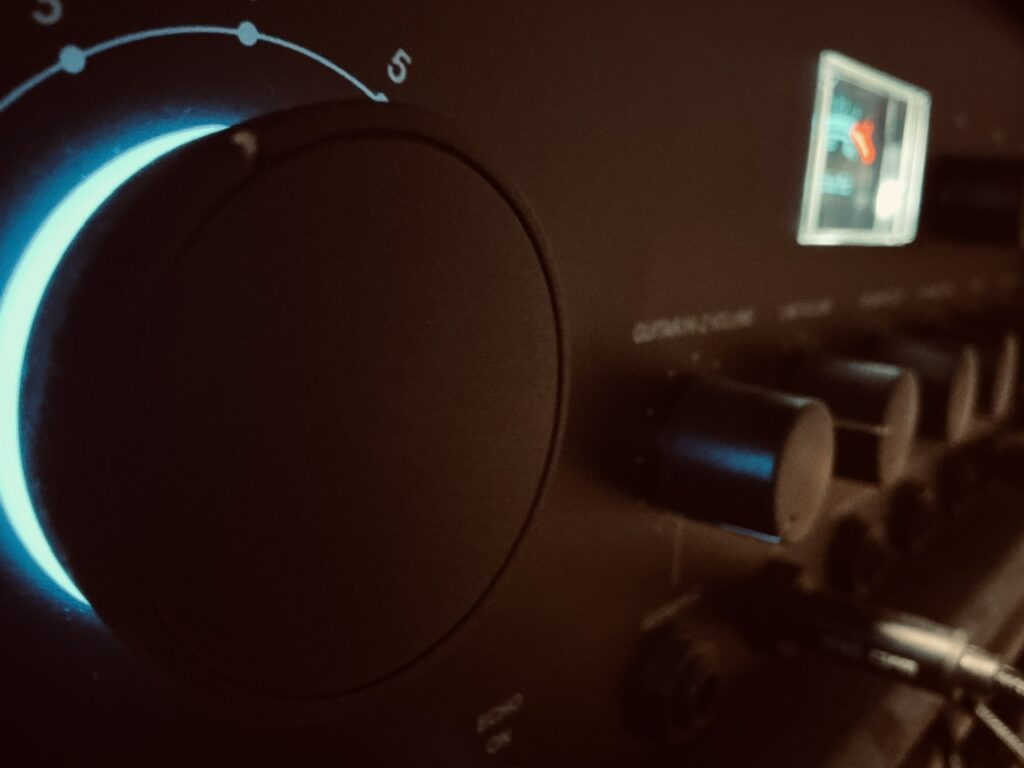
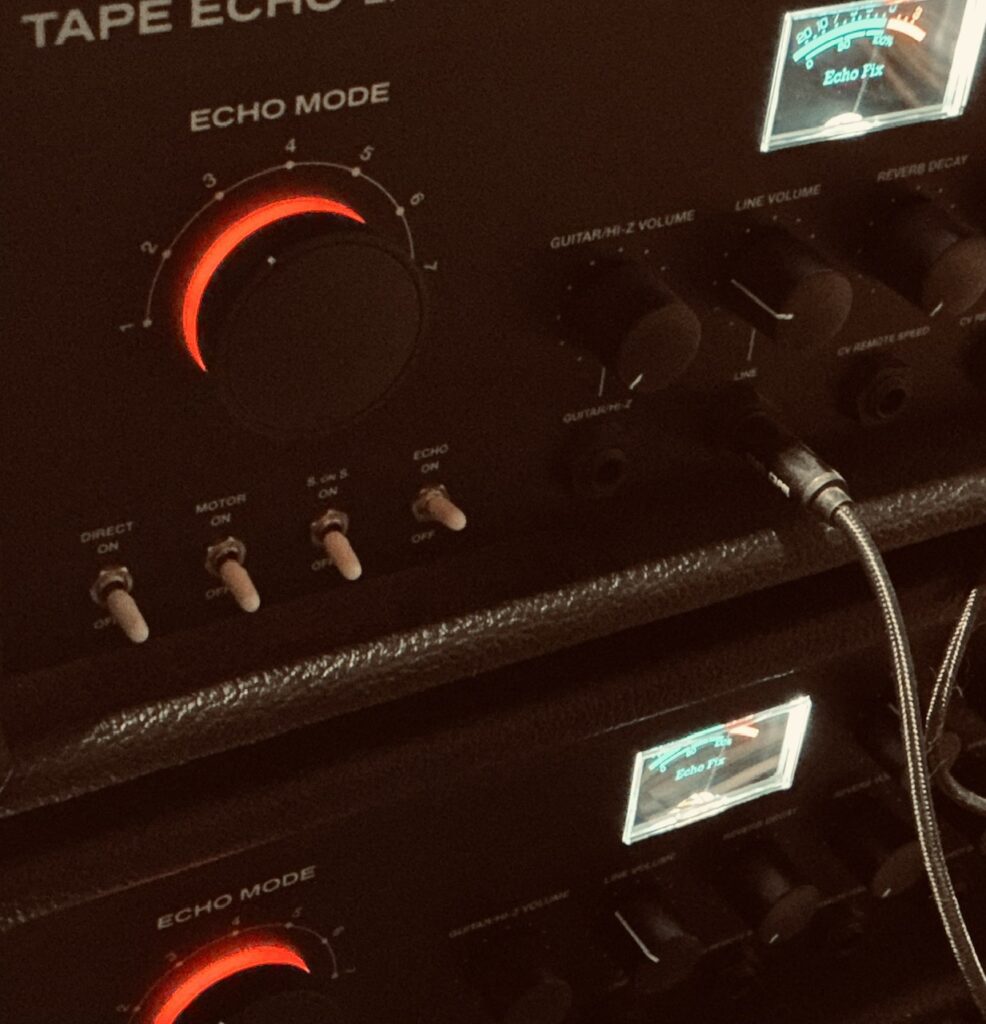
These chord tones, modulated through the harmonic series by The Hypster served as a cloud of ghosts. Each tone drifted in before slowly drifting away. The movement was subtle; almost dainty. This floating chord was then sent to a pair of Echofix EF-X2 tape delays for some echo action. Feedback was set reasonably high. Were it even just a little higher we’d be on the edge of self-oscillation. And these beautiful repeats danced in the stereo field, first with the third chord tone (G#) and fifth (B), the third and its harmonics climbing upwards in the left channel, followed by the fifth and its harmonics cascading downwards in the right. After a bit, the seventh (D) was also modulated up and down, though because of its presence, I decided to keep it centered. I thought about sending that tone on a panned adventure moving back and forth in the stereo field, but I reasoned that it would compete a bit too strongly with the stereo separated movement already happening. The repeats are already delicate enough. I saw no need to box them out when I didn’t have to.
Like Sketch 23, these chord tones and their movement were the inspiration for the patch, but they needed a more substantial base. Enter Chainsaw. The Acid Rain Technology Chainsaw is not a new module. It’s been around for several years, and even if it’s been replaced by an even more feature packed Ripsaw, it’s still a quite powerful, and immensely popular oscillator. Though paraphonic, a form of polyphony where each individual oscillator does not have its own discrete signal path, Chainsaw is capable of producing up to three note chocrds using three separate v/oct sources. It’s a huge sounding oscillator, capable of producing a 21 oscillator swarm that morphs from rich saw waves to a wonderful array of square waves. The various oscillators can be detuned from just slightly to absolute cacophony, and it’s a drone master. I had three separate v/oct signals from the Elektrofon Klang patched to Chainsaw, though two of them were identical in a bid to reinforce the bottom note (E1). As a way to add more harmonics I also had Chainsaw play a B2 (power chord 🤘) for a two note drone. Using Frisson to modulate both the wave shape and the detuning created a perfect amount of movement to keep it from becoming stale.
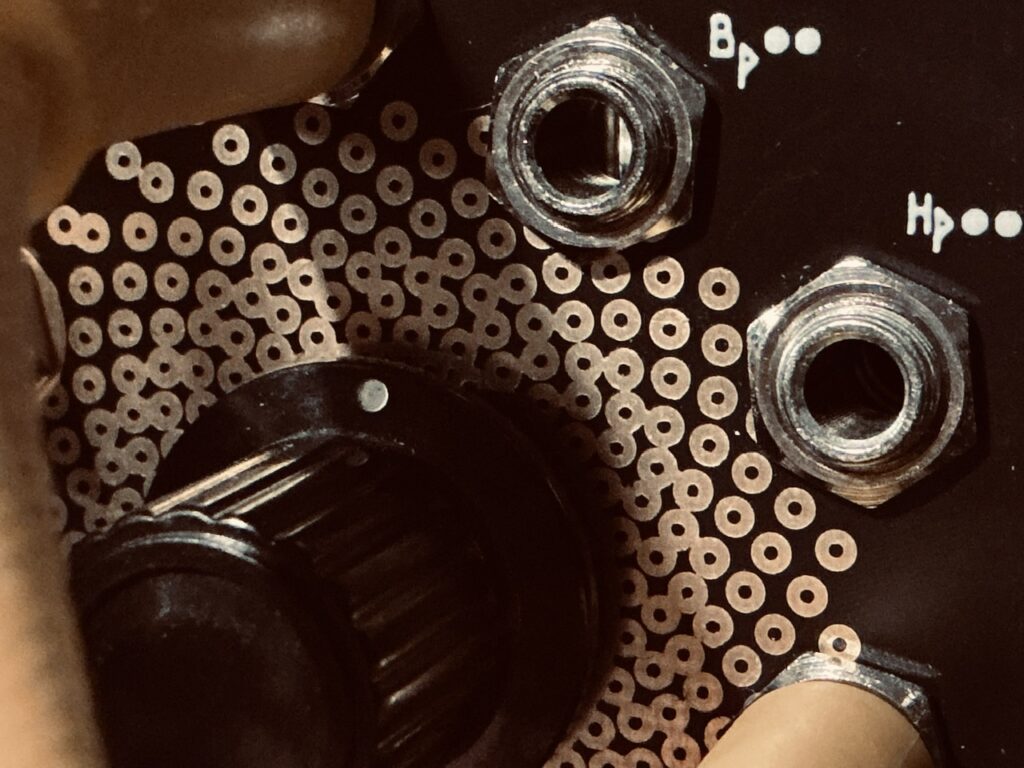
Initially I ran Chainsaw right to the mixer, but the waves were simply too rich and drowned out the floating chord I’d worked so hard to get, and so decided to run it through a filter. Choosing a filter this time was a bit difficult. My first inclination was to use the Bizarre Jezabel Seju Stereo, but the right channel simply didn’t work. I’ll have to test that further at some point, but it meant that was out of the running (which is a shame because the filter sweep sounded ace in the one channel). Next I tried the Bizarre Jezabel Pkhi Mk3, and although it was nice, it wasn’t special. It was fine. I then tried the Bizarre Jezabel Blossom, a spin off of the venerable Mannequins Three Sisters, but didn’t really care for the more drastic differences between the channels in this application. Although Pkhia is physically closer to the Chainsaw than all but the Seju Stereo, I didn’t try it until last. It’s not that I don’t like it. I do. But I’ve used it a lot and was hoping one of the others would be right for the job. Pkhia is a very interesting filter. It’s a multimode filter with simultaneous stereo LP, BP, and HP outputs, with shared resonance and filter cutoff. In a small twist, you can modulate each side’s cutoff frequency separately to create some very interesting movement in the soundstage, which greatly enhanced and accentuated the movement of Chainsaw. Two outputs from Frisson were patch to each side’s CV input to have an organic flow. As an added bonus, although I didn’t use them in this patch, Pkhia also has a switch to use it as a sort of DJ filter, with LP on the left channel and HP on the right channel. Pkhia also has a VCA with CV inputs. This filter can be both subtle or rich, and embodies the “sweet” nature of Bizarre Jezabel Filters.
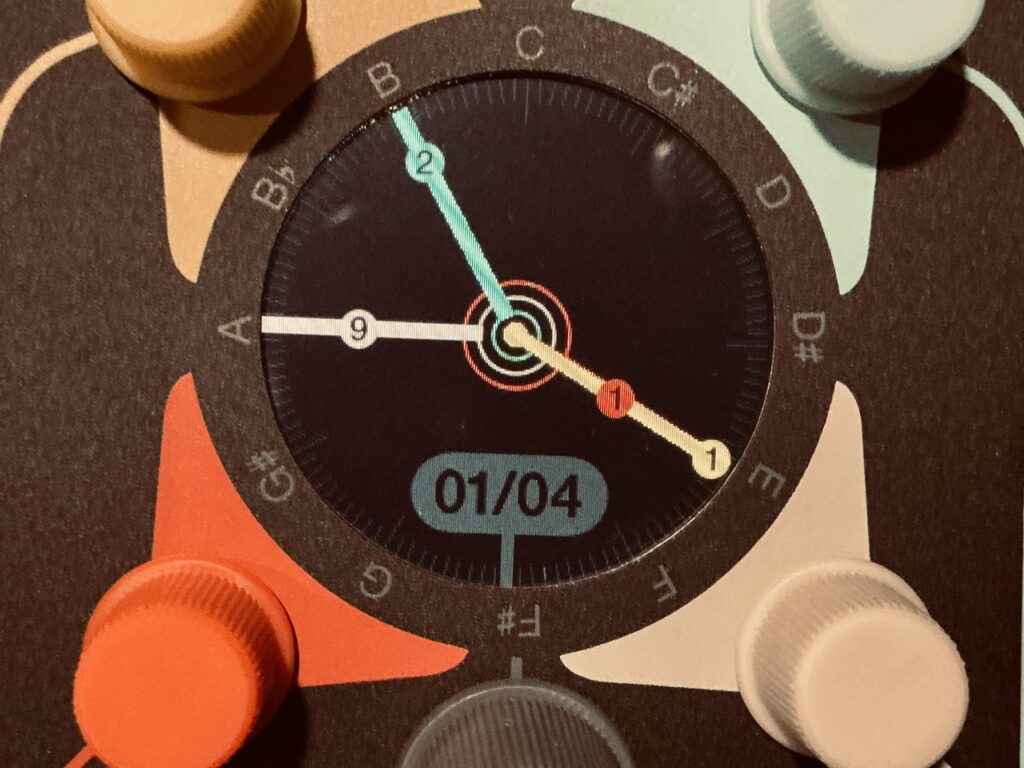
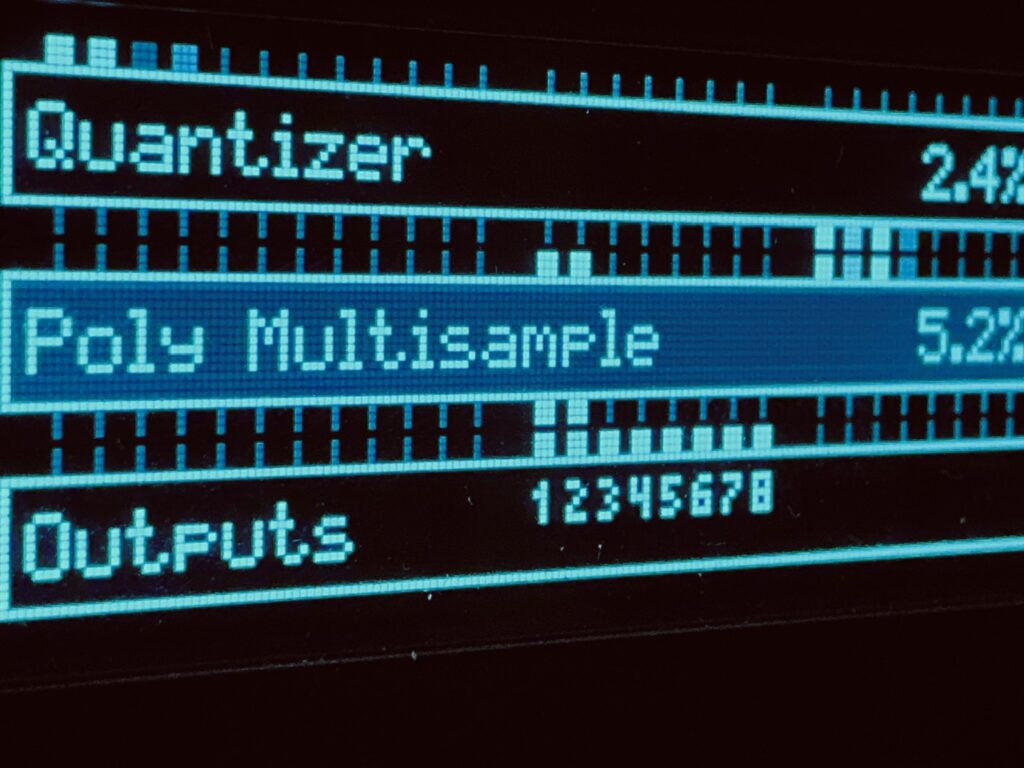
With the chaotic chords and bass drone settled, it was time for embellishment. I was initially hesitant to go an already well travelled route by using the Poly Multisample algorithm in the Disting NT. I’ve done that patch a bunch. But this was my first time back on this synth in a long time, and whether nostalgia compelled me, or else I simply retreated to what I was comfortable with, I don’t know, but Soft Piano is exactly where I landed.
I’ve used lots of techniques to play Soft Piano. Sequencer and gate? Check. Turing Machine? Check. Random gates and CV? Check. Chaos? Check. But perhaps, my favorite technique, even if it often takes a lot of time to set up in a way I like, is to use four chaos signals, in this case -X, -Y, -Z, and -U, to the inputs of both the Nonlinearcircuits Let’s Splosh and Numberwang which produced interrelated gate and CV signals at their respective outputs. If you use cyclical or clocked inputs with these modules, a steady pattern will emerge. But when using chaos, you get a somewhat predictable stream of gates and CV that hint at a pattern, but that are liable to deviate regularly, both in their timing and distribution. Even without modulating the source module, in this case The Hypster, the pattern stretched and contracted; notes stayed the same until they didn’t. That’s the nature of chaos.
I used six total gate outputs from Numberwang, combined with Stackcables, into the two gate gate inputs for the Poly Multisample algorithm, and two highly attenuated and lightly offset outputs from Let’s Splosh into two pitch CV inputs. These four signals controlled eight simultaneous voices, and it took a goodly while to find the right combination of outputs, particularly from Numberwang, in order to get a piano sound I was happy with.
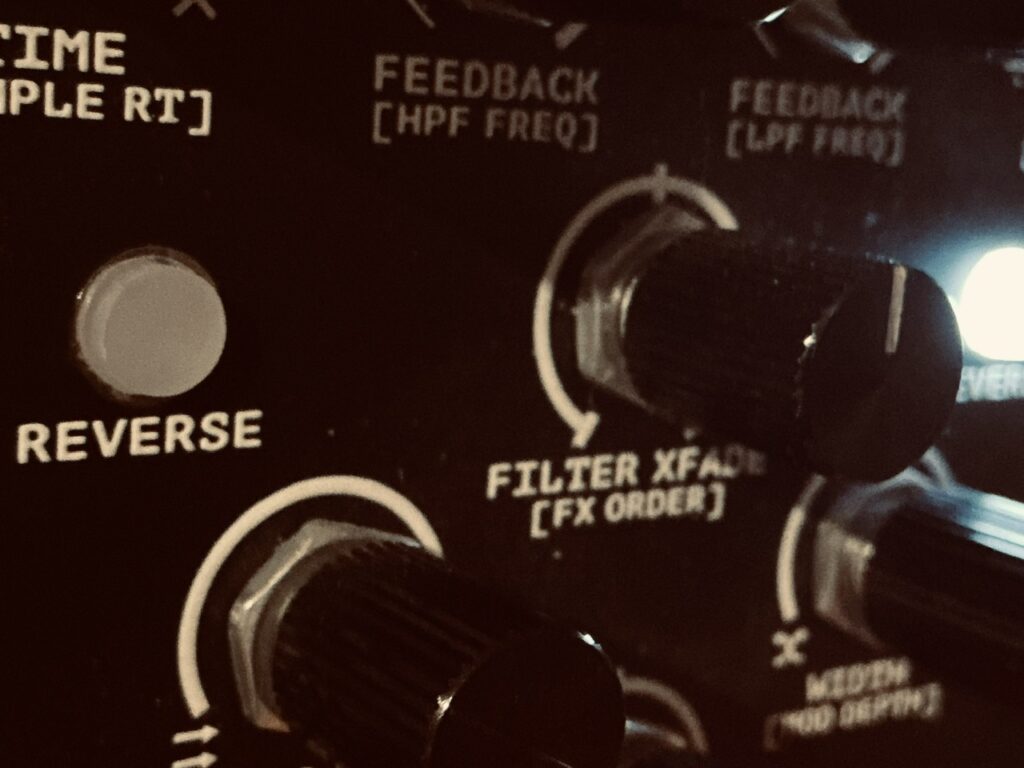
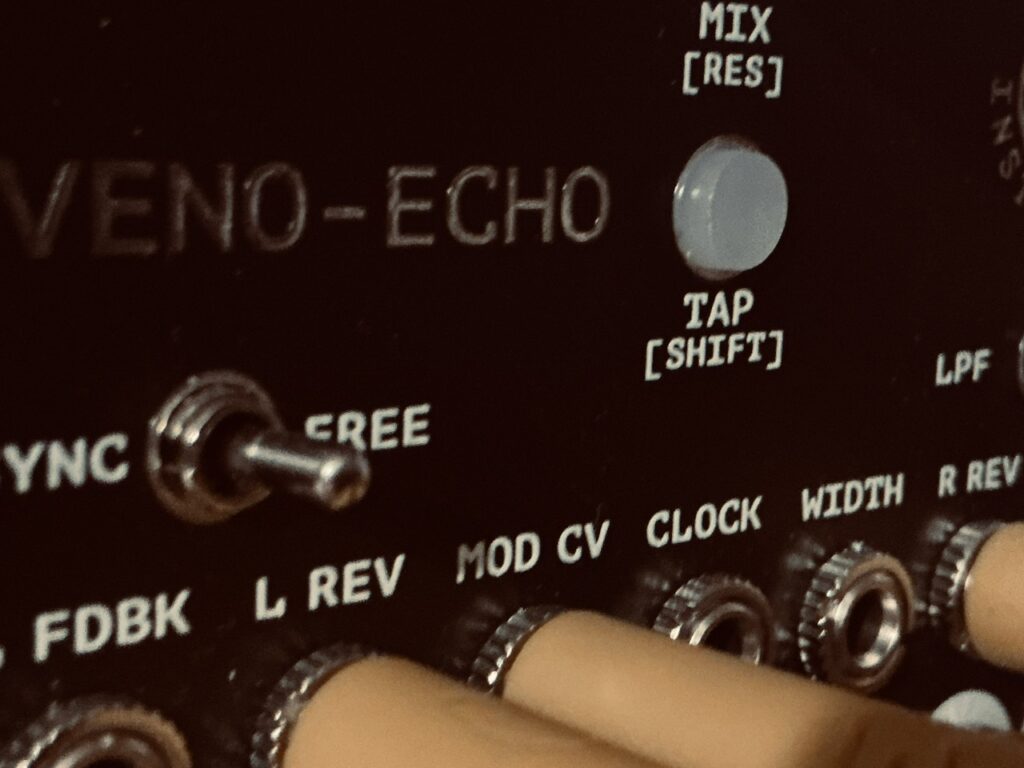
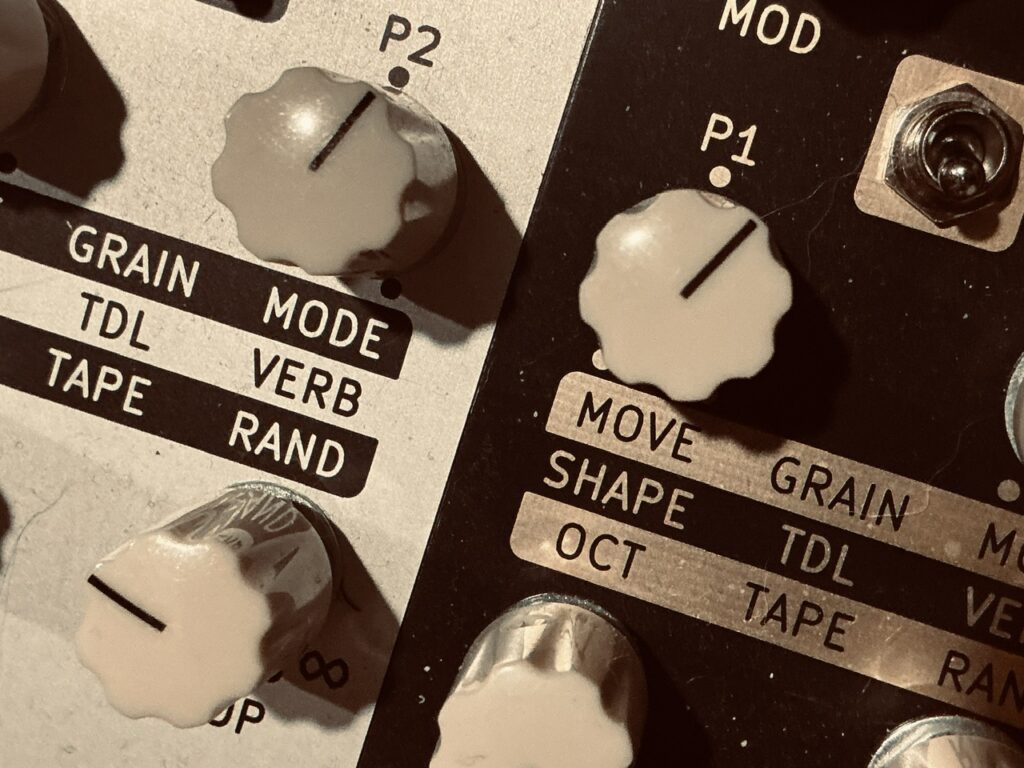
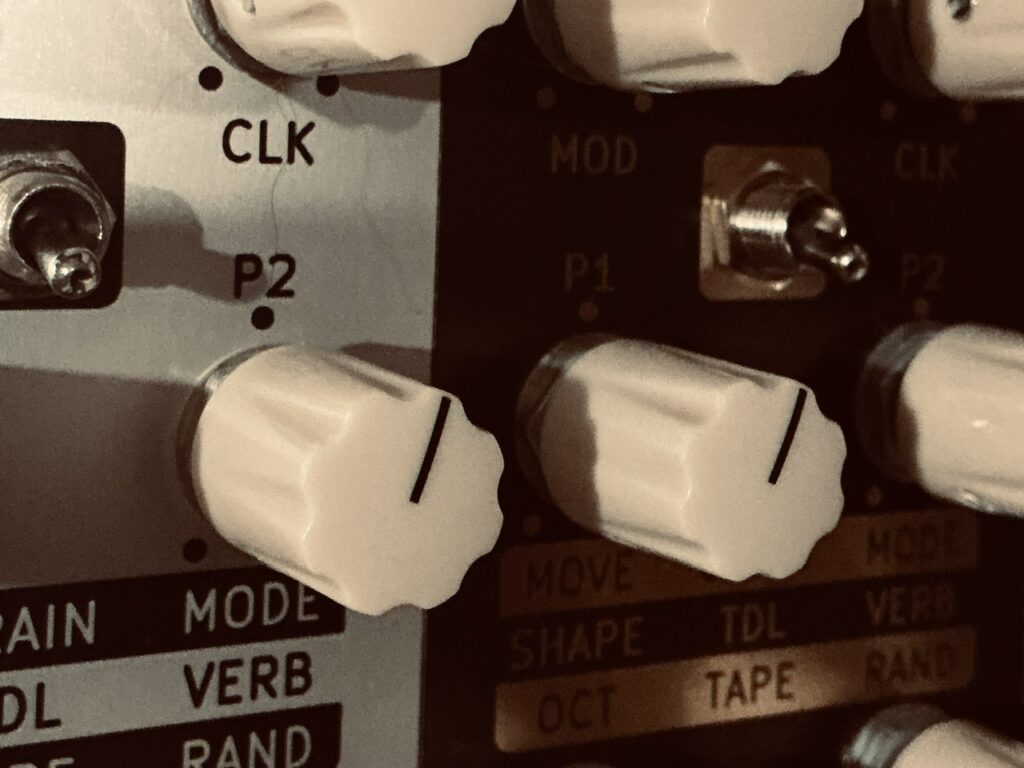
The stereo outputs from Disting NT were sent to the always-awesome Venus Instruments Veno-Echo, perhaps my favorite Eurorack delay overall. Veno-Echo was set up to be fairly slow, and with a smidge of sample reduction in the feedback loop. Two more gate outputs, picked at random, were patched from Numberwang which turned the Reverse parameter on and off on each side for those occasional intoxicating “zip” sounds of reverse delay.1 A mix of the dry piano and its repeats was sent to what is perhaps my favorite granular processor, the Dradd(s). Although Stereo Dradd was released a fairly long while back, I didn’t jump on it immediately. I’ve been using dual Dradd(s) for a long while and have been happy with the results. Initially I tried it in Grain mode, but just wasn’t all that happy with the results, so I decided to go with Tape mode, and strongly preferred the whacked out tape machine vibe. As this voice was introduced, there was no modulation. The Dradd(s) output an occasional hiccup at half speed. But as time progressed I introduced yet another set of chaos signals to modulate P2 on both Dradd(s), which controlled the speed and direction of playback. At first the effect was subtle. By the end it was a crazed out, all wet affair that sounded like a tape machine away about to simply fall apart.
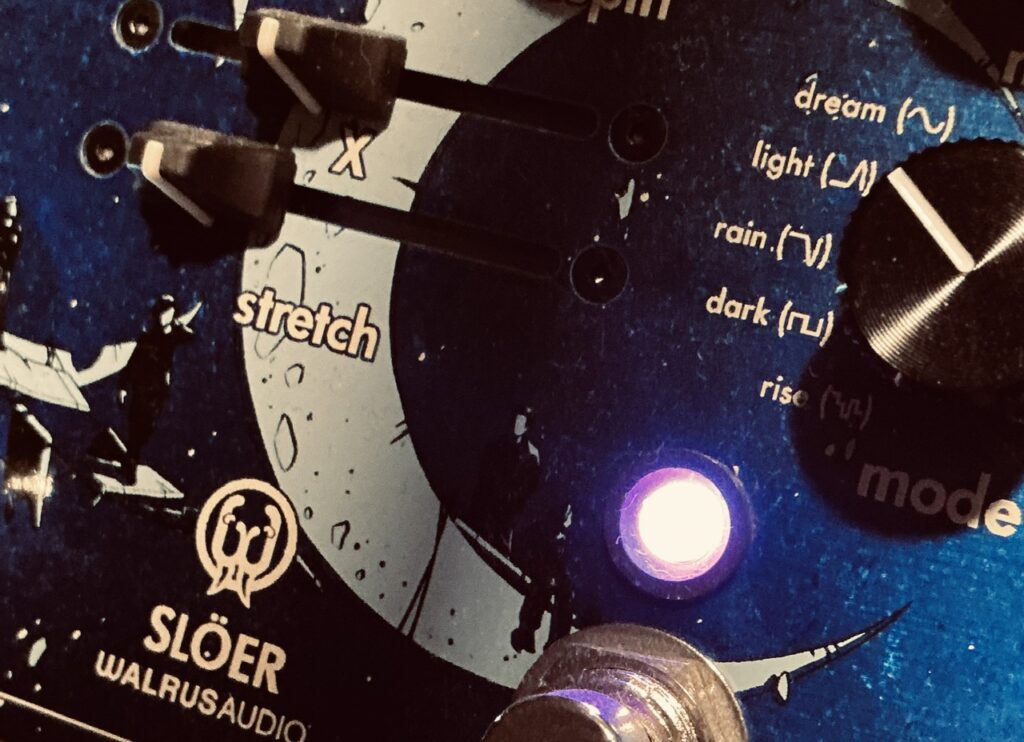
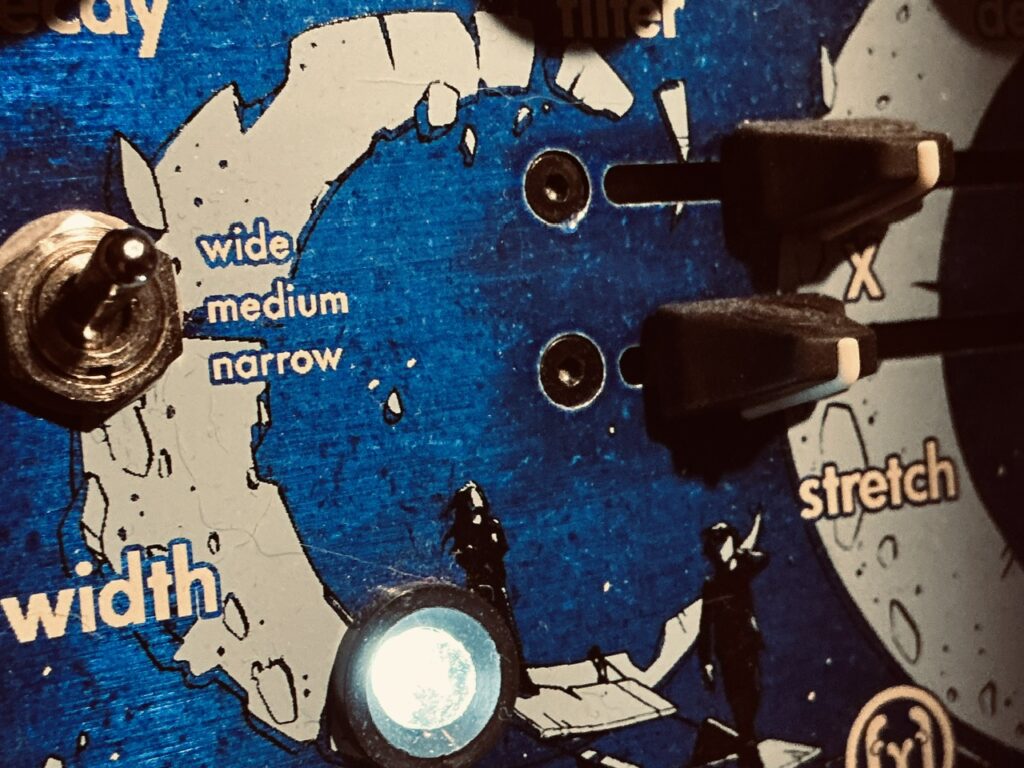
All of the audio was sent to the always wonderful Walrus Audio Slöer for some lofi, lightly pitched up reverb. Slöer is the perfect sort of reverb for a patch like this. With its internal clock set at the minimum via the Stretch slider, the edges of the audio seemed to disintegrate in highly musical ways; as if notes were falling apart rather than fading away gracefully. It’s a highly compelling effect in the right circumstances, and this sort of patch, inherently filled with noise and digital artifacts, practically begs for that sort of treatment.
The last part of this patch was to use the always fun Industrial Music Electronics Malgorithm MkII. I don’t normally add in a hardware effect on the output bus of a recording, but I wanted this whole recording covered in a high noise floor and with its integrity questioned. My first thought upon patching it in was “Man, I really like the high noise floor, even with the output at 100% dry.” In fact, after hearing it, that noise floor was purposefully introduced as the first thing you hear in the recording. Initially I wanted the output to have a varying amount of both sample and bit reduction to add a certain level variable crunchiness to the output. And while I liked the result, I was taken aback when I experimented with one of the wave shaping modes, even if meant having to scale way back on my initial intent as a means to accommodate it. I’m a huge fan of distortion. I’ve used it a bunch in many patches, and I’m beginning to come around to digital forms of distortion in some applications. That said, the digital distortions in the Malgorithm are anything but subtle. In fact, I’ve generally ruled them out of most patches because they’re simply too overwhelming, and with no way to control them other than with the amount of input volume the modules receive, I haven’t found many applications suitable for them.2 But this particular distortion just sounded so good that I felt the need to use it, even if in the end it might have proven sub-optimal. Because of how overwhelmingly loud Malgorithm’s distortions are, I could only mix the wet signal in very slightly, perhaps only five percent. Any more and the dry audio was completely decimated. This meant that I lost most, if not all, of the more subtle movement created with the chaotic modulation to both the bit and sample rates. Out went the grunginess of hitting a Nyquist Frequency, and in came near full audio destruction. And because the wave shapers on Malgorithm are only an on or off proposition, there was no way to gracefully fade in the distortion, which, in a perfect world, is what I would have preferred to do. The only way to fade in the distortion was to use introduce more wet signal to the mix. It was all or nothing, and I gratuitously chose all.
Modules Used:
Nonlinearcircuits The Hypster
Nonlinearcircuits Frisson
Nonlinearcircuits Let’s Splosh
Nonlinearcircuits Triple Sloth
Nonlinearcircuits Numberwang
Synthesis Technology E370
Intellijel Amps
Intellijel Quad VCA
Expert Sleepers Disting NT (Polyphonic Multisample)
Addac814 6×6 Stereo Matrix Mixer
Venus Instruments Veno-Echo
Pladask Elektrisk Dradd(s)
Vostok Instruments Asset
Elektrofon Klang
Acid Rain Technology Chainsaw
Bizarre Jezabel Pkhia
Industrial Music Electronics Malgorithm
ST Modular SVCA
Outboard Gear Used:
Echofix EF-X2
Walrus Audio Slöer
Noisy Fruits Lab Lemon
Improvised and recorded in one take on iPad in AUM via the Expert Sleepers ES-9.